


Macroeconomic environment
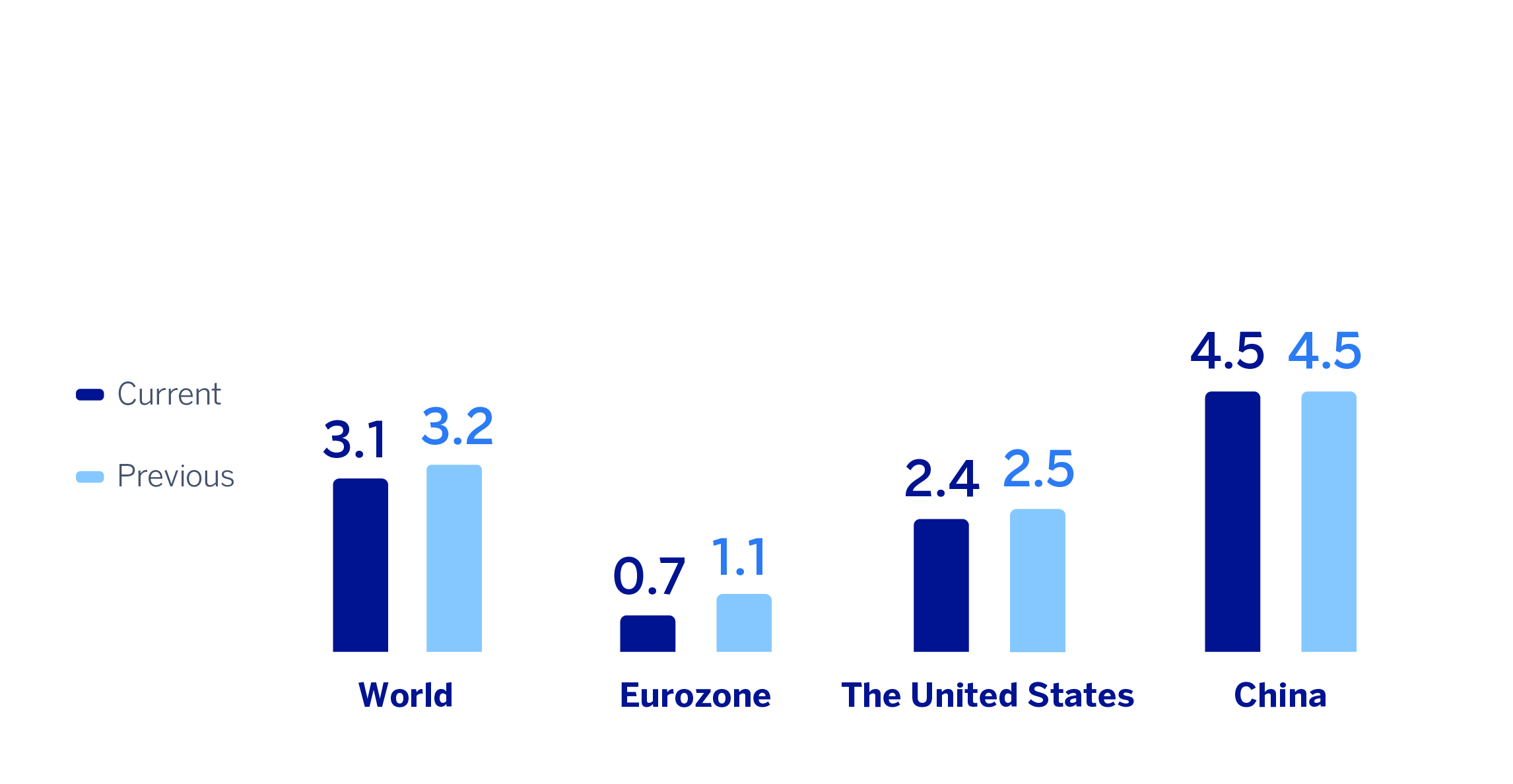
The global economy has remained resilient during the second quarter of 2026, despite the high levels of uncertainty and the prolongation of the conflict between the United States and Iran for longer than initially expected. According to BBVA Research, global GDP will grow by 3.1% for the full year, just one tenth below what was anticipated in the previous quarter, thanks to the support provided by the increase in investment in artificial intelligence, the increase in defense spending and the expansionary nature of fiscal policies.
The relatively strong performance of the U.S. economy and the strength of China in the face of the energy shock linked to tensions in Iran largely explain the resilience of global growth. In particular, the GDP growth forecast for the United States in 2026 stands at 2.4%, one tenth lower than in the previous scenario, with investment in technology driving domestic spending, while it remains unchanged for China, at 4.5%, where the dynamism of the external sector is limiting the effects of the adjustment in the real estate market. However, in the Eurozone, the impact of higher energy commodity prices on its economy is expected to be greater, which justifies the downward revision of BBVA Research's growth forecast for this year from 1.1% to 0.7%.
For its part, the price increases of energy-intensive goods and the supply chain disruptions associated with the conflict in the Middle East have raised inflation in the main geographical areas and are expected to keep it above the levels anticipated a quarter ago for the remainder of the year: in the case of the United States, the headline rate could stand around 3.5%, and in the Eurozone, above 2.5%. Given this price context, monetary policy will become more restrictive. BBVA Research anticipates that the Fed will leave benchmark interest rates unchanged at 3.75%, compared to the two cuts expected in the previous scenario, and the ECB will keep them at 2.25% following the hike carried out in June. In China, monetary conditions will also be somewhat less accommodative and rates could remain at 2025 levels.
The balance of risks for the global economy has improved following the restoration of trade flows in the Strait of Hormuz and the correction in oil prices, although uncertainty remains high regarding the definite resolution of the crisis between the United States, Iran and Israel. Added to this are the protectionist measures in trade and immigration, and the structural challenges facing Europe and China. Geopolitical tensions in several Middle Eastern countries, the possible revival of the threat of potential actions by the United States administration in Greenland or Mexico, and uncertainty regarding the reaction of central banks and their impact on financial markets also constitute sources of risk. On a positive note, it is worth mentioning the boost in investment in artificial intelligence and its medium-term effect on the productivity of economies that promote its adoption.
GDP GROWTH ESTIMATES IN 2026
(PERCENTAGE. YEAR-ON-YEAR VARIATION)
Source: BBVA Research estimates.
Read legal disclaimer of this report.