


Macroeconomic environment
The global economy has remained relatively resilient during the first half of 2025 despite high levels of uncertainty, trade tensions and the US administration's immigration restrictions. The negative effects of protectionist policies appear to be mitigated by fiscal stimulus, lower than expected effective tariffs and the strong growth in investment in artificial intelligence. Low financial volatility, supported by the Federal Reserve's (hereinafter, Fed) expansionary monetary policy, is also supporting global activity.
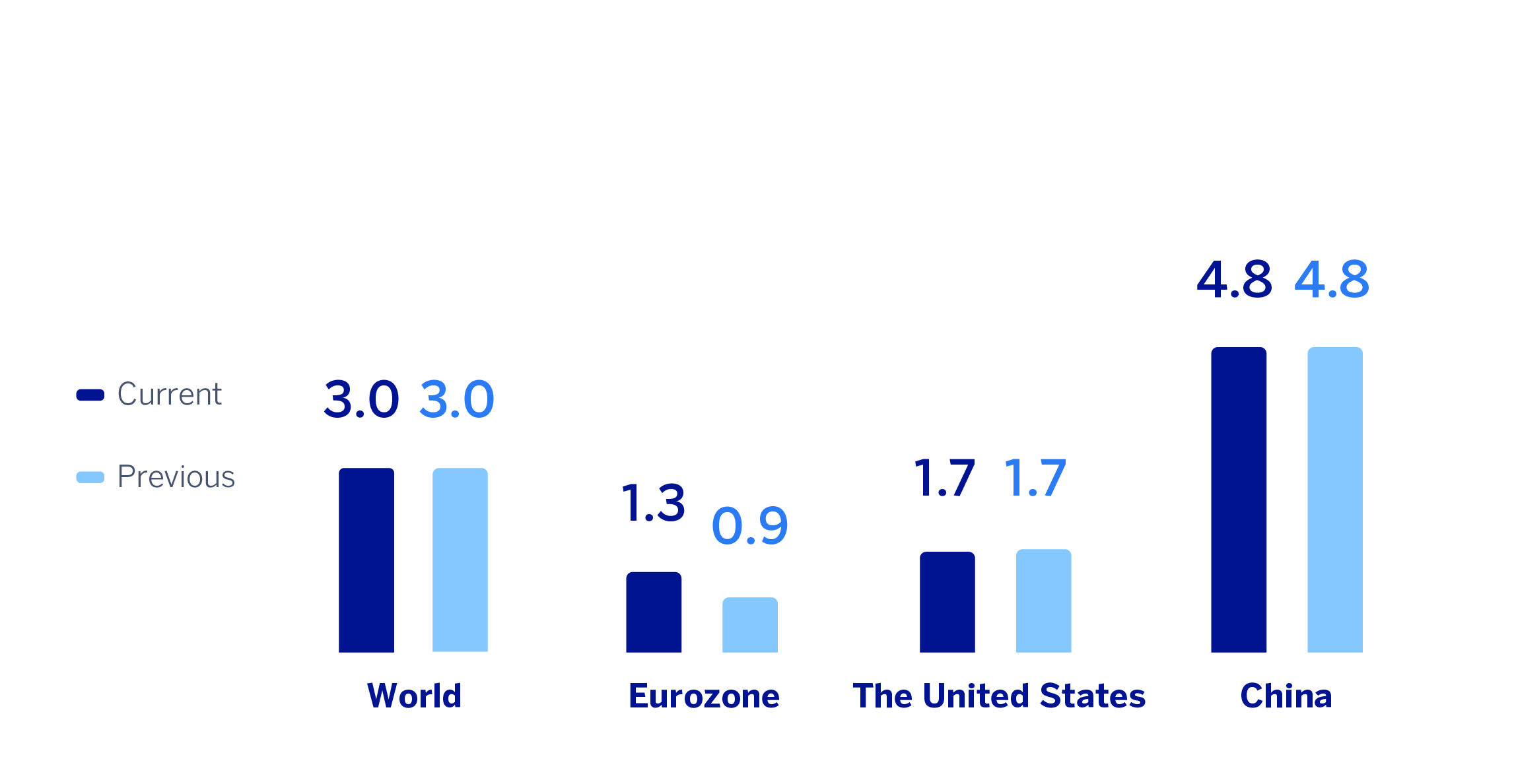
Even so, BBVA Research estimates that global growth will moderate in 2025 to 3.0%, in line with the previous forecast, and will reach around 3.1% in 2026. For the United States, the forecast of an economic slowdown remains unchanged, with a GDP growth of 1.7% in 2025 (unchanged from the previous forecast) and 1.8% in 2026. In the Eurozone, the upward revision of activity data in the first half of the year raises the GDP growth forecast for this year to 1.3% (four tenths more than in the previous scenario). By 2026, growth is expected to be reduced to 1.0%, in a context where the impact of tariffs and political instability in some countries in the bloc will be partially offset by increased spending on defense and infrastructure. In China, the economic slowdown continues: GDP could grow by 4.8% in 2025 (the same rate as previous quarter's forecast) and 4.5% in 2026.
Although the tariff increase is expected to keep inflation in the United States at around 3% by the end of 2026, the Fed could respond to the loss of momentum in the labor market with further interest rate cuts, following the reduction to 4.25% in September. In particular, BBVA Research forecasts at least two additional rate cuts in 2025, to 3.75%, and further reductions during 2026 to reach levels of 3%. In the Eurozone, BBVA Research expects the ECB to keep the deposit facility interest rate unchanged (at 2%) if inflationary pressures remain contained (the average inflation rate could close 2025 at 2.0% and 2026 at 1.8%) and downside risks to growth do not intensify. In China, monetary conditions are likely to continue to ease given the current context of very low inflation.
The balance of risks for the global economy remains weighted to the downside. In addition to protectionist measures in trade and immigration, and the structural challenges facing Europe and China, there is also uncertainty about the Fed's independence and its potential impact on financial markets.
GDP GROWTH ESTIMATES IN 2025
(PERCENTAGE. YEAR-ON-YEAR VARIATION)
Source: BBVA Research estimates.
Read legal disclaimer of this report.